

大周列國志
Play on PC with BlueStacks – the Android Gaming Platform, trusted by 500M+ gamers.

Page Modified on: Feb 10, 2026
Main 大周列國志 on PC
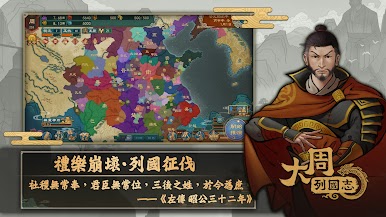
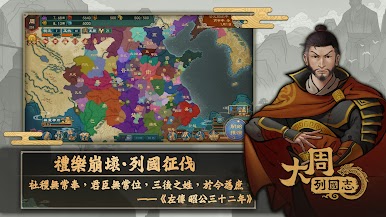
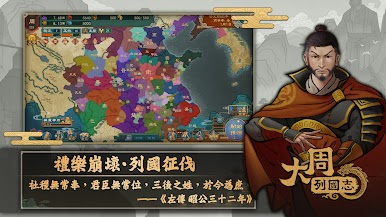
— *Zuo Zhuan*, Duke Zhao, Year 32
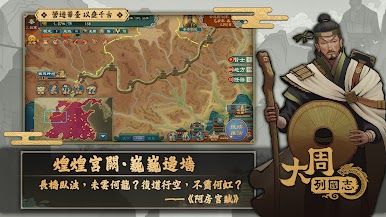
This is a historical strategy/simulation game set against the timeline from the Battle of Zhuolu to Wang Mang's usurpation of the Han dynasty. It recreates the grand historical journey of thousands of years, from the ancient battlefields of the early Chinese civilization, to the early Western Zhou dynasty with its ritual and music culture, to the chaotic Spring and Autumn period with its collapse of ritual and music, to the Warring States period, Qin's unification of the six states, the Chu-Han Contention, and the late Western Han dynasty.
In times of great chaos and the rise of powerful states, one could freely vie for supremacy in the Central Plains. But if one were born into a newly established era of peace and harmony, with states united under the rule of ritual and music, what means would a regional ruler use to develop and strengthen his power, realizing his ambition to "swallow up the two Zhou dynasties and destroy the other states"?
Challenge the emperor's authority, subdue other states, and plot to become a hegemon; or march east beyond Hangu Pass, sweep away all other states, and rule the land under heaven.
The path to hegemony or the path to emperorhood lies entirely in the mind of the "ruler"!
【Dynasty Mode】
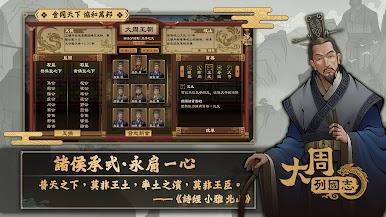
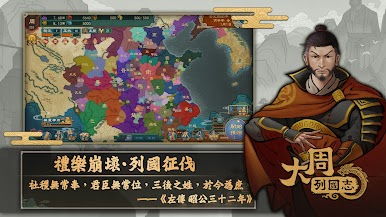
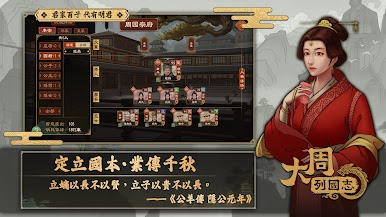
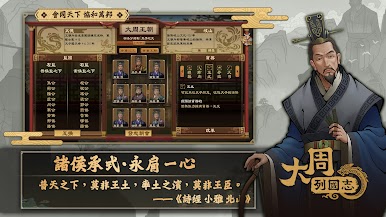
◆The Dynasty system interprets the historical evolution from the era of rites and music to the warring states and finally to a unified, centralized empire.
◆In different eras, the rules followed by the feudal lords differ, allowing players to truly immerse themselves in this era and drive its change.
【Hundred Schools of Thought】
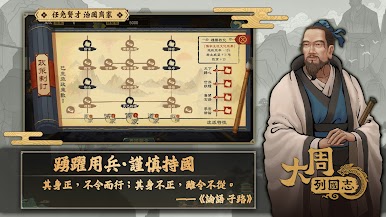
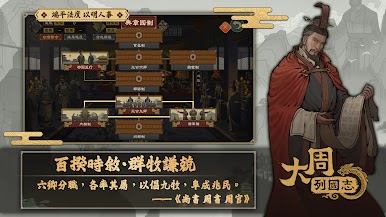
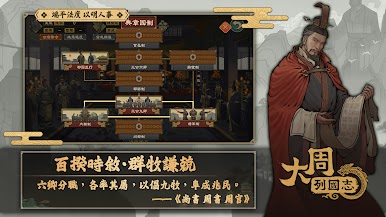
With "Hundred Schools of Thought" as its core, the game features nine major cultural schools, including Confucianism, Legalism, and Military Science.
◆Culture: Feudal lords and local cities possess cultural attributes belonging to different schools, and their chosen culture influences everything from the direction of national development to food production and manpower. A powerful cultural influence can even attract other cities to surrender voluntarily.
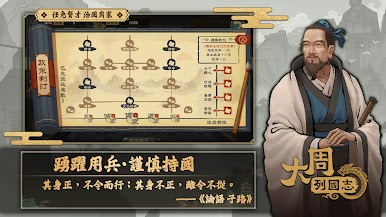
◆National Politics: Over one hundred sets of national policy reforms from different schools of thought, implementing political ideals and development paths, leading a century-long trend of innovation!
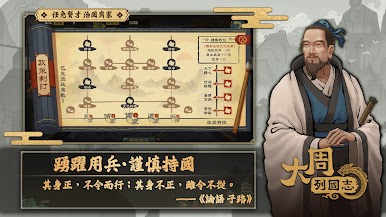
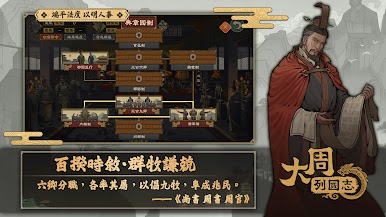
◆Talent: Talented individuals from different schools possess unique strengths. Whether serving as city lords, court officials, or carrying out missions, knowing and employing talent effectively is crucial to maximizing their impact.
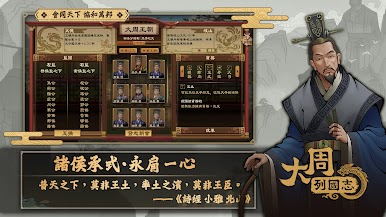
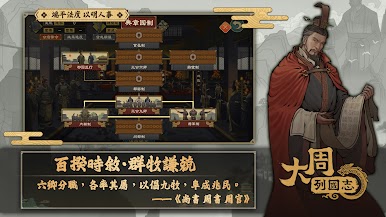
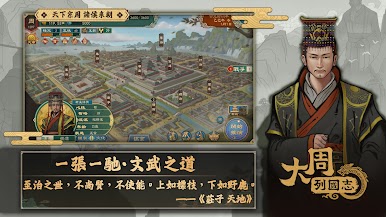
【Internal Administration】 ◆National System and Regulations: Reform mechanisms such as the prefecture-county system and the prefecture-kingdom system, as well as official systems like the Three Dukes and Nine Ministers and the Inner Court system, customizing the nation's operational system.
◆Stage Advancement: Experience the evolution through stages such as early people, regional states, ritual and law, sages, and nations, unlocking unique cultures, policy trees, and strategies, paving the way for civilization's development.
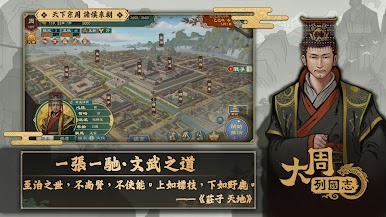
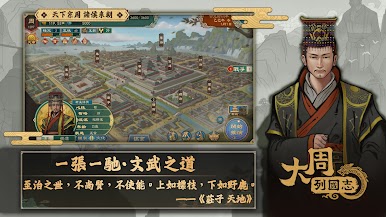
◆Macro-Management: Adjust tax rates, service rates, water conservancy, population, city defense, culture, agricultural construction, and military construction, planning and setting development goals.
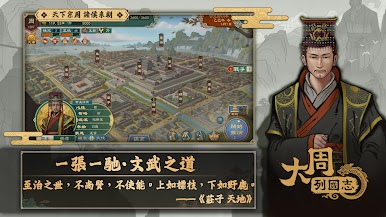
◆City Characteristics: Cities possess different terrain types and characteristics. Some cities are strategically located and easy to defend, while others boast convenient transportation and rapid development, and still others have well-developed waterways conducive to agricultural growth…
◆Local Governance: Comprehensive consideration and planning are needed for the economic development, culture, security, and military preparedness of each city.
【Diplomacy & Espionage】
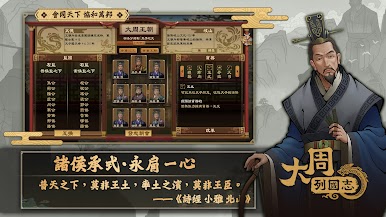
◆Diplomacy: A rich array of diplomatic relationships: suzerain, vassal, ally, and enemy constantly shift during gameplay. It encompasses dozens of diplomatic options, including marriage alliances, declarations of war, alliances, and intimidation, recreating classic historical game strategies.
◆Espionage: Plant spies, establish intelligence networks, and gain a comprehensive view of the world. Assassination, subversion, incitement, obstruction… experience the thrill of "Jing Ke's Assassination Attempt on the King of Qin" in the game.
【Military System】
◆Strategy: Strategically, in conjunction with diplomatic operations, actions such as forming alliances, employing distant alliances while attacking nearby enemies, and relieving the siege of Wei by attacking Zhao can all be implemented in the game.
◆Military Preparation: Recruit reservists, expand manpower, train troops, establish troop types, and equip with weaponry.
◆Combat: A constantly changing battlefield with multi-unit formations allowing players to command armies strategically.
◆Generals: A system of generals based on historical periods, featuring renowned figures like Bai Qi and Han Xin, delivering exhilarating battles.
【Artifact System】 Artifacts are witnesses to history. Standing silently and profoundly in the river of time, they record countless details of civilization.
◆Highly recreated precious cultural treasures from history, players can freely craft, collect, and nurture them. Offering artifacts grants corresponding buffs.
◆Artifacts can be discovered and acquired through random in-game events, adding more unpredictability to the game.
◆Occupying cities and defeating other factions offers the opportunity to acquire their artifacts; in chaotic times, possessing treasures is a crime.
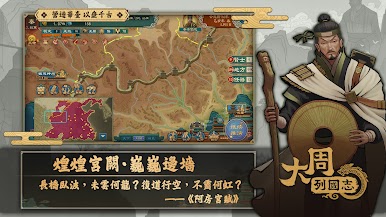
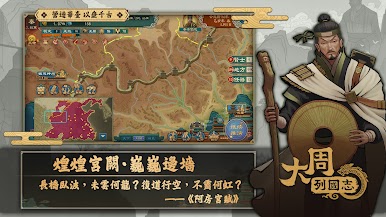
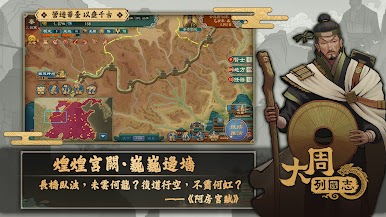
[Wonder System] Wonders, like dazzling pearls on the land of China—the Great Wall, the Mausoleum of the First Emperor, the Terracotta Army... they blend grandeur and exquisite detail, resembling magnificent and vivid works of art, showcasing the wisdom and courage of ancient civilization.
◆ In-depth exploration and research of historical wonders restores their historical background and cultural elements. The crystallization of ancient wisdom leaps onto the map of various kingdoms, highlighting the profound character of Chinese history and culture.
◆ Each wonder will bring unique mechanic changes or attribute enhancements. Choose a suitable city to initiate construction, providing more possibilities for conquering chaotic times.
◆ Destroy forces, occupy wonders; every building will become a new strategic objective.
[Traditional System] In history, monarchs often referred to themselves as "Sons of Heaven," meaning that their power was divinely ordained, thus demonstrating legitimacy and authority. Reverence for "Heaven," deities, and ancestors is an indispensable part of historical tradition.
◆The Mandate of Heaven and the Five Virtues: The theory of the Five Virtues was proposed by Zou Yan, a Yin-Yang scholar. Metal, wood, water, fire, and earth are considered the five elements, each representing one virtue, and dynasties were believed to alternate according to the order of mutual restraint or generation among the elements. The game incorporates a Mandate of Heaven and Five Virtues system that influences the rise and fall of dynasties.
◆Sacrificial System: "The great affairs of the state are sacrifice and war." Sacrifices are offered to deities to pray for bountiful harvests and the cessation of disasters, ensuring national peace and prosperity. Sacrifices are offered to ancestors to demonstrate the legitimacy of the monarch and ensure peace in the court.
【Other Systems】
◆Random Events: The game includes numerous random events, allowing players to experience the unpredictable changes of the era.
◆Academy Debates: The game recreates the intellectual debates of the Hundred Schools of Thought, with debates periodically between different schools of thought.
◆Rongdi System: Players can establish friendly relations, wage war, and request aid from the Rongdi, Western Regions, and Xiongnu. This adds more elements to the political landscape of the dynastic system and reflects the integration of ethnicities and cultures.
◆ Faction System: Factional intrigue emerges from court clashes, recreating the power struggles of ancient imperial courts and deeply integrating domestic affairs, military affairs, and power struggles.
◆ Ancestral Spirit System: "Mandates" can be obtained through actions such as conquering cities and implementing policies. These "Mandates" points are used to activate cards, providing immediate effects to one's faction, such as directly building an army, increasing culture, and enabling the use of special troop types.
◆ Studying Classics: Acquire the abilities and strategies of talented individuals through study, and write biographies of deceased figures to pass on their legacy and knowledge.
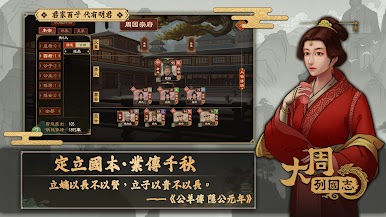
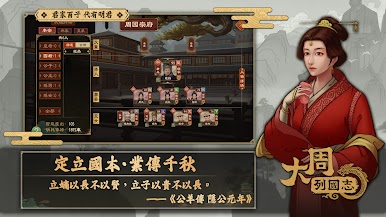
◆ Ruler and Family Management: Strengthen the clan and produce offspring through marriage alliances and other means. Targeted training can also be provided for young sons and the crown prince.
◆ Nobles and Regional Governors: Grant fiefs, assign regional governorships, and manage taxation for nobles and regional governors, using imperial tactics to balance the power of various factions.
◆Separatist Forces: Includes warlords and rebel armies. Players can choose to play as or fight against them, simulating a chaotic historical period where various warlords vied for control of the Central Plains.
◆Commerce System: Through the exploitation of local resources and the exchange of resources with external forces, players can craft and equip their armies with weapons more compatible with their unit types, improving combat effectiveness and gameplay.
◆City Exploration: In addition to normal cities, there are unclaimed territories that can be freely cultivated, hunted, and migrated, providing players with more strategic options.
【Contact Us】
wiki: https://wiki.biligame.com/dazhoulieguozhi
Facebook: https://www.facebook.com/ZhouDynastyGame
Discord: https://discord.gg/XpuAyM5Xsw
email: cs@mysgame.top


Play 大周列國志 on PC. It’s easy to get started.
-
Download and install BlueStacks on your PC
-
Complete Google sign-in to access the Play Store, or do it later
-
Look for 大周列國志 in the search bar at the top right corner
-
Click to install 大周列國志 from the search results
-
Complete Google sign-in (if you skipped step 2) to install 大周列國志
-
Click the 大周列國志 icon on the home screen to start playing