Top 10 Tips and Tricks to Enjoy Heartopia to the Fullest
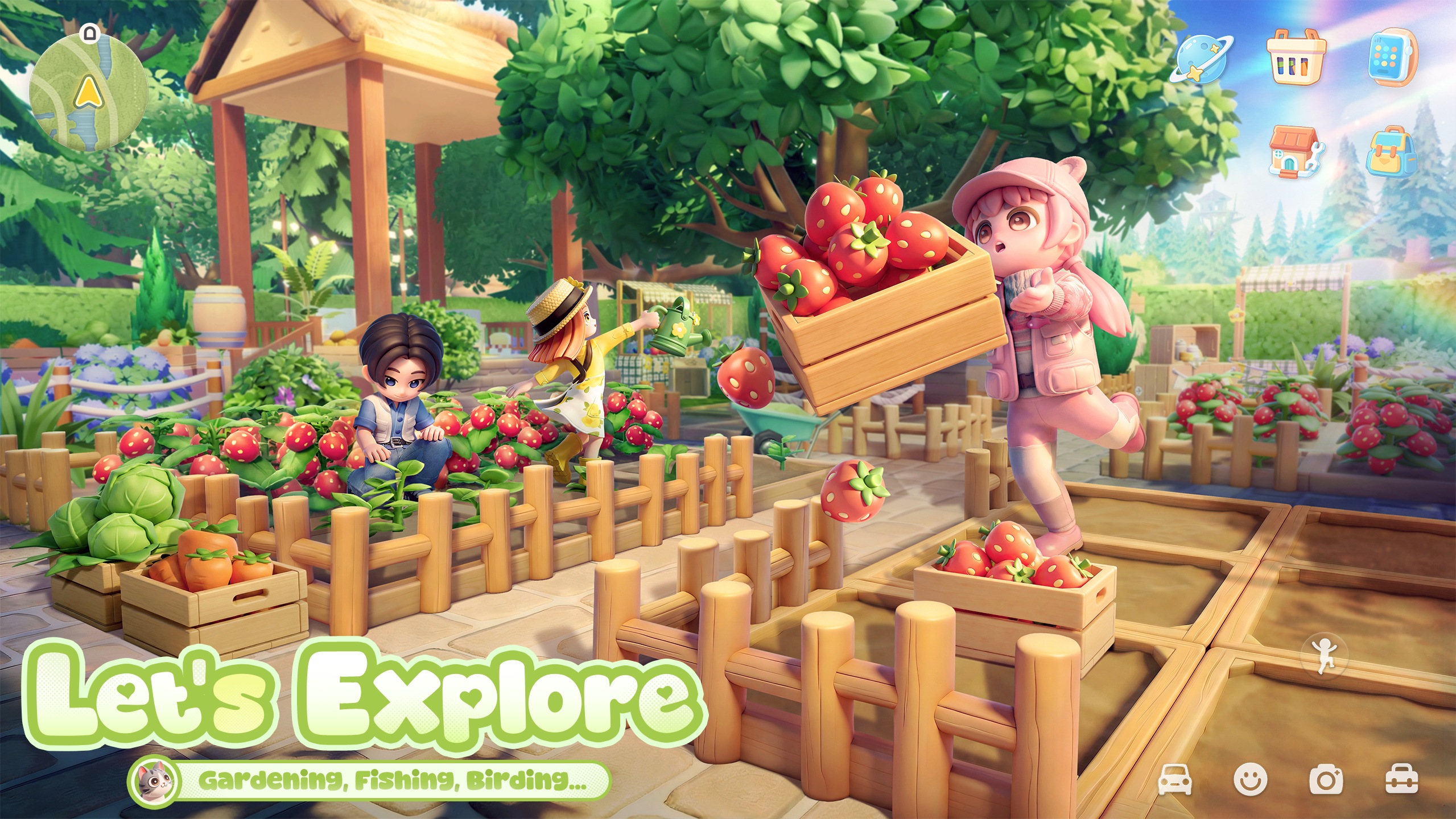

Heartopia hides its most important mechanics behind soft language and gentle tutorials. Because nothing feels urgent or restrictive, many players accidentally stall their progression or misinterpret systems as cosmetic when they are actually structural.
This guide focuses on how Heartopia is meant to be played, not just how to survive the tutorial. These tips explain where progression actually comes from, how systems connect, and what the game quietly expects you to do over time.
Tip 1: Treat the Developer’s Guild as the Real Progression Spine
Heartopia does not use levels, combat power, or stats as its main progression metric. Instead, almost every meaningful system is gated through the Developer’s Guild. Storage expansion, selling items, hobbies, house expansion, and feature unlocks are all tied to Guild progression.
If something feels unavailable or incomplete, it is almost always because the corresponding Guild level has not been reached yet. Understanding this early prevents confusion and wasted effort trying to force systems that are intentionally locked.

Tip 2: D.G. Tasks Are Designed to Teach Systems, Not to Be Completed Quickly
Developer’s Guild tasks are often misread as chores. In reality, each task is a guided introduction to a system the game wants you to internalize, such as fishing, crafting loops, or selling items.
Rushing through these tasks without understanding what they unlock leads to shallow progression. Treat every task as a tutorial, not an objective, and pay attention to what becomes available after completion.

Tip 3: Your House Is a Production Space, Not Just a Decorative One
Early on, the house feels like a cosmetic feature, but structurally it functions as a production hub. Crafting stations, storage flow, furniture interaction, sleeping, and future expansions all depend on how your house is laid out.
Poor early placement decisions can make crafting and interaction feel clumsy later. Always think in terms of access paths, open floor space, and future additions rather than aesthetics during early progression.

Tip 4: Crafting Bottlenecks Come from Space, Not Materials
Most early crafting slowdowns are not caused by missing materials but by missing stations or poor placement. If a recipe appears unavailable, it is usually because the required station is not placed or accessible.
The game assumes players understand physical crafting logic. Stations must exist in the world, not just in inventory, and placement matters.

Tip 5: Storage Management Becomes a Progression Problem Very Early
Inventory and storage limits are intentionally tight in the early game. This is not a punishment but a signal that storage expansion and selling are core systems you are expected to unlock through the Developer’s Guild.
Hoarding everything leads to friction. The game expects players to periodically convert excess items into progress by selling or crafting, not by stockpiling indefinitely.

Tip 6: Resource Nodes Are Balanced for Rotation, Not Farming
Trees, bushes, and stone nodes respawn on a cycle designed around movement. Standing in one area and waiting is inefficient by design.
The intended loop is to gather while traveling between objectives, homes, NPCs, and landmarks. If you treat gathering as part of movement rather than a task, resources will never feel scarce.

Tip 7: Tool Durability Is Not a Punishment System
Tool durability exists to pace gathering, not to restrict it. Repair kits are cheap, accessible, and intentionally introduced early to reinforce maintenance as a habit.
Letting tools degrade too far interrupts flow. Regular repairs keep gathering smooth and reinforce the game’s emphasis on care over replacement.

Tip 8: Hobbies Are Long-Term Identity Tracks
Hobbies like fishing are not designed to feel rewarding immediately. Their real value comes from cumulative collectibles, decorations, and identity expression over time.
If you judge hobbies based on early rewards, they will feel pointless. If you treat them as background activities that slowly shape your home and profile, they become one of the game’s most meaningful systems.

Tip 9: Titles Signal Progression in the Game
Titles are often mistaken as purely cosmetic labels. In practice, they function as progression markers that the game uses to contextualize your character’s identity and stage.
Changing titles later is expected, and early choices do not lock you into anything. The system exists to reflect growth, not to define a build. And the whole point of Heartopia is to make the game your own: titles help you do just that.

Tip 10: Mailbox Rewards Are a Hidden Progression Accelerator
Mailbox rewards are not filler. Compensation items, recipe boxes, and system gifts are often timed to support newly unlocked systems.
Ignoring mail slows progression subtly but consistently. Checking the mailbox regularly keeps your resource flow aligned with the game’s pacing.

Heartopia is not a game about efficiency, but it is a game about understanding intent. Progression comes from recognizing which systems are structural and which are expressive, and playing into that balance instead of fighting it.
Players who treat the Developer’s Guild as the backbone, the house as a functional space, and hobbies as long-term identity tracks will find Heartopia opening up naturally over time. For the best gaming experience, play Heartopia on BlueStacks!