Stardew Valley Beginner’s Guide for Mobile: Understanding the Core Mechanics and How to Progress

Stardew Valley might look simple at first glance, but beneath the cozy farming theme lies a layered simulation with systems that interact in meaningful ways. For new players, the early hours can feel overwhelming, especially since the game offers little guidance. This beginner’s guide explains the core mechanics, the activities you’ll perform on a daily basis, and how each system contributes to your long-term progression. The goal is to give you enough clarity to start your farm confidently and understand how to grow, explore, and expand at your own pace.
Let’s start farming!
Choosing Your Farm Layout
Before your adventure begins in Stardew Valley, you must choose one of several farm layouts, each shaping your early-game experience. All layouts support every activity, but the available space, terrain features, and resource nodes vary. Beginners often choose the Standard Farm for its simplicity, but the others offer unique advantages worth knowing about.

- Standard Farm: Focused on pure farming space, ideal for learning crop layouts and experimenting with buildings.
- Forest Farm: Offers renewable large stumps for Hardwood and seasonal foraged items, but with reduced tillable space.
- Hill-Top Farm: Features a small mining area with ore nodes that regenerate over time, though farming space is more limited.
- Riverland Farm: Dominated by waterways, great for fishing but restrictive for large crop fields.
- Wilderness Farm: Monsters spawn at night, providing early combat practice but adding nighttime danger.
- Four Corners Farm: Designed for multiplayer but also strong in single-player, dividing the farm into themed quadrants.
- Beach Farm: High foraging value and supply crates wash ashore, but sprinklers do not work on sand, making crop automation difficult for beginners.
- Meadowlands Farm: Starts you with a coop and two chickens and features grass that helps you befriend animals faster.
Choosing a farm layout won’t lock you out of any major feature, so don’t stress too much. The layout mostly shapes your early rhythm, not your long-term potential.
Getting Started: Tools, Energy, and Your First Steps
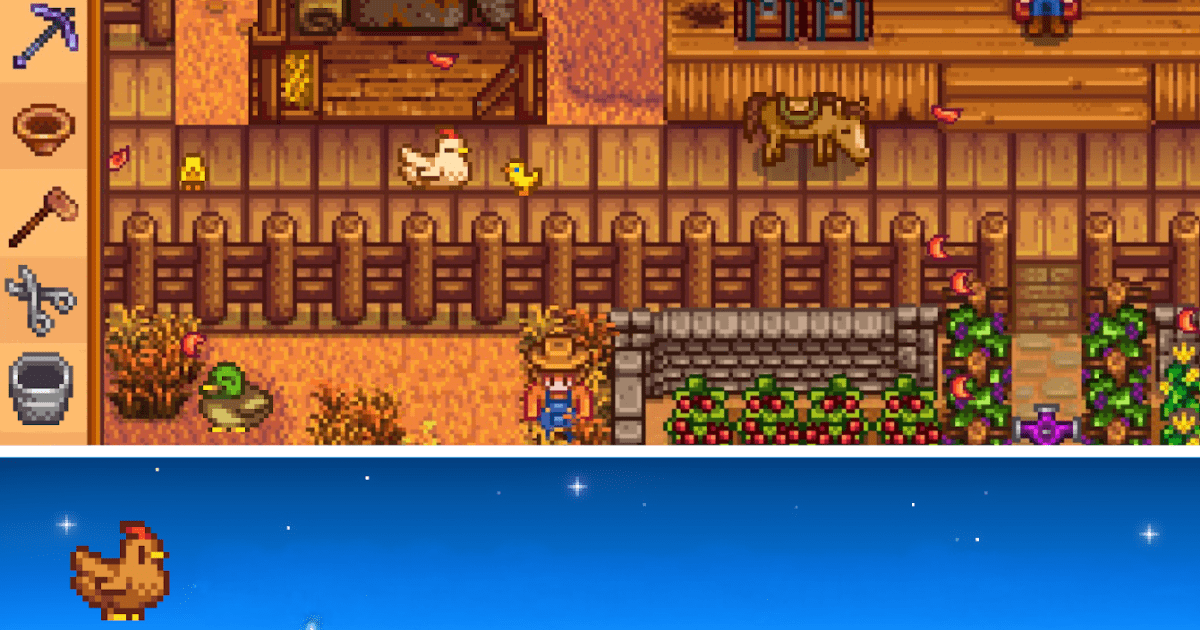
Your character begins with five essential tools: the axe, hoe, pickaxe, scythe, and watering can. The axe clears branches and chops trees; the pickaxe breaks stones and opens paths in the mines; the hoe tills soil and digs up items; the scythe cuts grass and weeds; and the watering can hydrates your crops. You’ll use these tools constantly, and almost every upgrade in the game will make them easier and faster to operate.

Your most important limitation in the early game is energy. Every tool swing (except the scythe) consumes energy, and you’ll start each day with a limited amount. Eating food restores energy, and sleeping resets it, but if you stay up too late or push your character into exhaustion, you’ll wake up with a reduced energy bar the next day. Managing energy efficiently is one of the core skills new players must learn, especially during the first season.
The game also uses a real-time clock that moves steadily throughout the day. Activities like farming, clearing your land, exploring the mines, and foraging all take time. If it reaches 2:00 AM and you’re not in bed, your character collapses and may lose money or items. Staying aware of both energy and time becomes second nature as you continue playing.
Farming Basics: Planting, Watering, and Harvesting
Farming is the most recognizable activity in Stardew Valley and often the primary source of income early on. To grow a crop, you till soil with your hoe, plant a seed, and water it each day until it matures. Crops never die from lack of water, but they stop growing until you resume watering them. Some crops produce a single harvest, while others continually produce once they mature.
You can improve your efficiency with sprinklers, which automatically water nearby tiles each morning. Sprinklers become available after you level up your farming skill and collect the required materials. Upgrading your watering can is another option, although it requires giving it to the blacksmith for two days, so planning around rain or the end of a season is important.
Every crop is tied to a specific season. Spring, Summer, Fall, and Winter each last 28 days, and most crops die when the season changes. Understanding seasonal rotation helps you plan ahead, buy seeds in bulk, and maximize your returns with the right crops at the right time.
Exploring Pelican Town and Socializing with Villagers
Pelican Town is the hub of Stardew Valley, populated by characters with unique routines, interests, and storylines. Interacting with villagers builds friendship points, which unlock dialogue changes, cutscenes, mail gifts, crafting recipes, and even marriage options. Talking to villagers daily and giving them gifts they like is the simplest way to build relationships.

You’ll often receive mail from villagers requesting items, which gives quick rewards and small boosts in friendship. Pay attention to birthdays on the town calendar; giving someone a liked or loved gift on their birthday yields eight times the standard friendship points, making it one of the fastest ways to grow your social ties.
Social progression isn’t required, but it enriches the game significantly and unlocks options like house upgrades, children, and more meaningful interactions in the world.
Where to Buy Supplies: Pierre’s General Store vs. JojaMart
Early progress in Stardew Valley revolves around buying seeds and supplies, and the town offers two main vendors: Pierre’s General Store and JojaMart. Both sell crops and basics, but each serves a different gameplay route.
Pierre’s General Store
Located in the center of Pelican Town, Pierre’s sells the bulk of your seasonal seeds at fair prices. His shop closes on Wednesdays and has limited hours, but it supports the Community Center path, which is the more traditional, community-focused route.
Pierre’s also sells important upgrades such as backpacks, and stocks small goods like fertilizer and saplings. For most new players, Pierre’s becomes the natural hub for farming supplies.

JojaMart
This corporate supermarket sells the same seeds at higher prices but is open every day. JojaMart represents an alternate progression path where you purchase town upgrades rather than completing bundles in the Community Center. It’s a convenient option when shops are closed, though more costly in the long run.
Both stores help beginners get started, but Pierre’s offers better value and aligns with the classic Stardew Valley experience.
The Community Center and Town Progression
Early in the game, you’ll unlock the Community Center, a large building filled with bundles, which are small collections of items the magical Junimos request in exchange for rewards. Completing bundles restores different parts of the town, such as repairing the bus to the desert or unlocking new farming opportunities.

You can complete the bundles slowly or pursue them actively; there is no time limit. Each room completed noticeably improves the valley and expands the content available to you. Completing the community center is one of Stardew Valley’s main long-term goals and a good way for beginners to understand how each gameplay system connects.
Alternatively, you can purchase a JojaMart membership and unlock the same upgrades with gold instead of bundles. Most players choose the Community Center because it offers more variety and feels like “restoring the town.”
Mining and Combat: Gathering Ores and Materials
The mines open early in your first spring and introduce combat, resource gathering, and vertical progression. Each floor contains rocks, ores, geodes, monsters, and a ladder leading deeper. Mining ores is essential for crafting, especially for producing metal bars used for tool upgrades, sprinklers, and machines.

Combat is simple but requires awareness of your health bar and weapon reach. Killing monsters grants combat experience, and leveling the skill unlocks health increases and weapon bonuses.
Staying safe in the mines means bringing food for healing and watching the clock to avoid passing out before making it home. Because time continues to move, it’s a good idea to descend gradually, securing elevator checkpoints every five floors so that future trips start deeper.
Upgrading Tools and Improving Your Farm
As you progress through Stardew Valley, upgrading your equipment becomes essential for saving time and increasing productivity.
Tool Upgrades
Tool upgrades require metal bars and gold, and they are carried out at Clint’s Blacksmith, located east of the town square. The blacksmith will hold your tool for two in-game days, so plan upgrades when the weather forecast predicts rain or when you know you won’t need a specific tool immediately.
- Axe: Cuts trees faster and allows you to break large stumps and logs once upgraded.
- Pickaxe: Makes mining faster and lets you break tougher rocks deeper in the mines.
- Hoe: Improves tilling range and efficiency.
- Watering Can: Reduces daily effort by watering multiple tiles at once at higher upgrade tiers.
- Trash Can: Upgrades let you recover more gold when discarding items.
Bars used for these upgrades come from smelting Copper, Iron, Gold, and Iridium Ore in furnaces you craft on your farm. Ore is primarily collected in the mines, where deeper levels yield better materials.

Farm Infrastructure Upgrades
Beyond tools, your farm itself evolves through building upgrades and automation systems.
- House Upgrades (at Robin’s Carpenter Shop): Unlock the kitchen, more space, and later the nursery for marriage and children.
- Barns and Coops: Allow you to raise livestock for milk, eggs, and artisan goods like cheese and mayo.
- Silos: Store hay, which becomes essential once you start caring for animals.
- Sprinklers: Crafted as your Farming skill grows, these automate daily watering and greatly reduce early-morning routines. Higher-tier sprinklers water larger areas, and pressure nozzles later expand their range even further.
Upgrading steadily rather than rushing helps maintain a balanced income while keeping your energy and time flexible for exploration, socializing, and mining.
Fishing, Foraging, and Other Activities
Fishing is one of the most profitable early-game skills but takes practice. The fishing minigame becomes easier as your fishing skill rises and as you acquire better rods and tackle. Many fish appear only in specific seasons, weather, and locations, so fishing organically teaches players how the game world cycles and changes.

Foraging is simpler: berries, flowers, and wild plants grow around the valley each season. Chopping trees also counts as foraging and provides essential wood throughout the game. Keeping a steady supply of wood and stone helps you craft chests, build farm structures, and expand your workshop.
In addition to these activities, you’ll gradually unlock more features such as cooking, animal care, machine crafting, and greenhouse farming. Each system builds on the last, giving you new ways to structure your day and refine your farm’s layout.
Managing Your Farm Layout and Building New Structures
Your starting farm is filled with debris like trees, rocks, logs, and weeds, so cleaning it up is one of the first long-term tasks. Clearing space allows you to arrange crops, barns, coops, storage sheds, and machines in a way that fits your preferred playstyle.
Farm buildings are constructed by Robin in the mountains. Early on, the coop, silo, and barn become essential. The silo lets you store hay from cutting grass, and without it, livestock becomes expensive to maintain. Chickens and cows become reliable income sources over time, especially when you process their products into mayo or cheese.

Upgrading your house unlocks a kitchen, allowing you to cook meals that boost energy and other stats—helpful for mining and farming efficiency.
Seasons and Festivals: Understanding the Annual Cycle
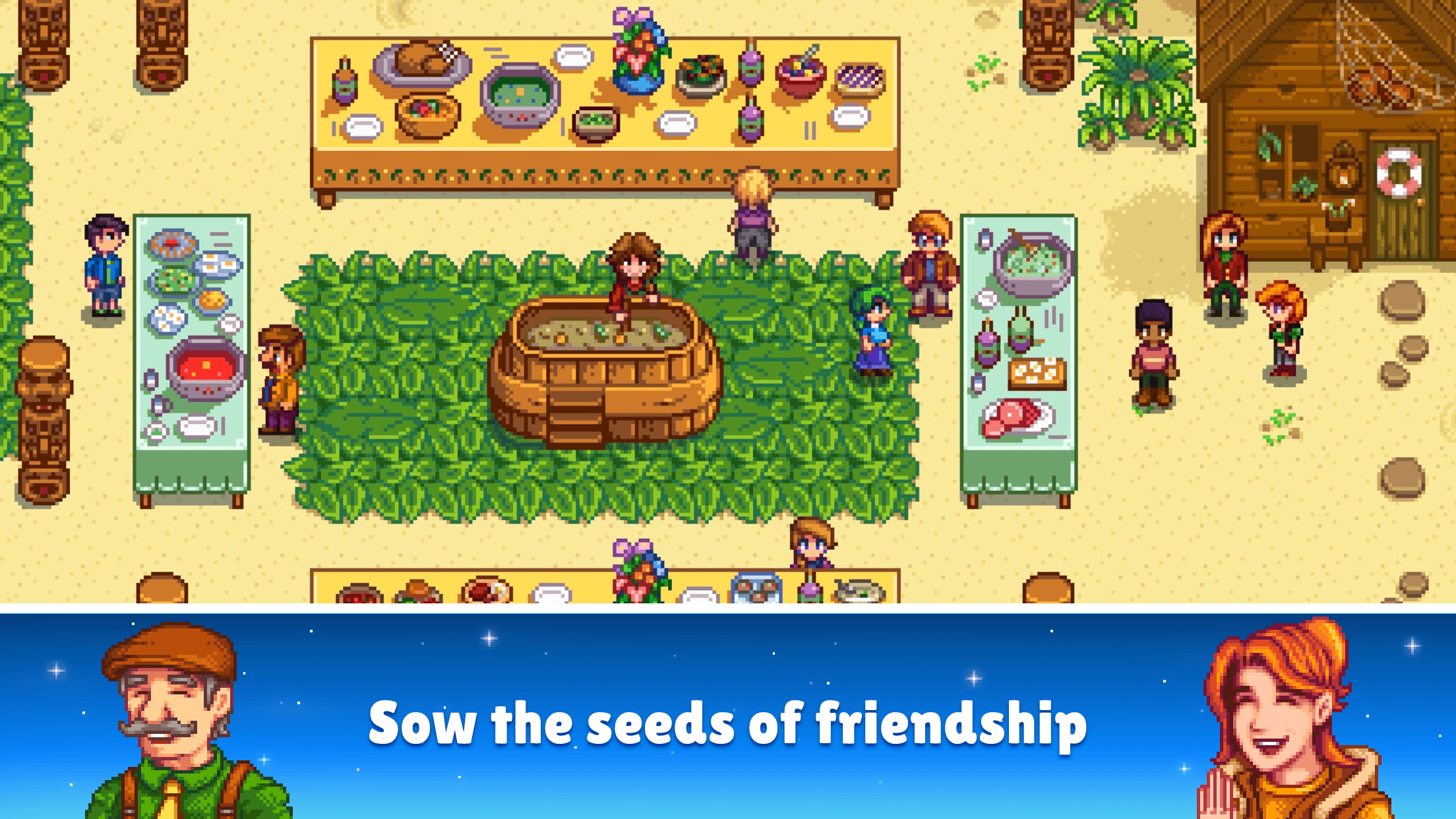
Each season has distinct crops, fish, forageables, and festivals. Festivals provide social opportunities, small rewards, and unique items. Participating in them isn’t required, but they add structure and personality to the valley.
The biggest seasonal shift occurs in Winter, when farming halts entirely unless your greenhouse is repaired. This makes winter ideal for mining, fishing, animal care, and preparing your farm layout for the upcoming year.

As you experience the cycle of seasons, you’ll naturally learn how to plan ahead—saving money near the end of a season, preparing fertilizer, and stocking up on seeds for the next planting period.
Growing Into the Game at Your Own Pace
Stardew Valley never rushes players. There are no deadlines (outside of crop seasons), and every mechanic can be explored gradually. As a beginner, your primary goals are simple: maintain your farm, grow your skills, explore the valley, and pick up new systems when you feel comfortable.
Over time, you’ll refine your daily routes, optimize your crop layouts, deepen your relationships with the townsfolk, and slowly unlock the game’s larger secrets and areas.
Whether you prefer farming, mining, fishing, crafting, or socializing, the game supports every playstyle and gives you the freedom to shape your farm however you want.
The charm of Stardew Valley lies in its flexibility. Once you understand the core mechanics of farming, mining, crafting, the social dynamics, and seasonal planning, among others, you can approach each day with confidence and build the farm you want, at the pace you choose. Mobile players can enjoy the full experience from anywhere, and the game’s slow, rewarding progression makes it ideal for learning as you go.
To make the most of your farming adventure, play Stardew Valley on PC with BlueStacks. You’ll get better controls, smoother performance, and the ability to multitask comfortably, letting you manage your farm with maximum efficiency.