Among Us Behavioral Consistency Guide: How to Play the Same Regardless of Role

The best players in Among Us are impossible to read because they play identically whether they are a Crewmate or an Impostor. This Among Us Behavioral Consistency guide covers the meta-strategies behind replicating the same voting habits, reporting habits, communication style, and movement patterns across both roles so experienced players can never pin your role based on how you act.
What Among Us Behavioral Consistency Actually Means?
Most players change their behavior the moment they see their role assignment. Impostors suddenly go quiet, rush to high-traffic areas, or become overly helpful in meetings. Crewmates become more vocal when they feel safe. These shifts are exactly what experienced players look for to identify roles without any direct evidence.
Among Us behavioral consistency means playing the same way round after round regardless of which role you are assigned. The goal is to make your behavior an unreliable source of information. If nobody can predict how you will act based on your role, nobody can use your behavior as evidence against you.

The Consistency Principle in Among Us: How Psychology Backs This Up
Consistency is a well-documented principle in social psychology. People build trust in others who behave predictably over time and instinctively flag those whose behavior shifts unexpectedly. In Among Us, this translates directly. When your past behavior across rounds is used as evidence in a meeting, every inconsistency is data. Stick to a coherent narrative and match what you say to what you have done. Remind allies of your past behavior when it supports your case, and build that case the same way whether you are the accused Crewmate or the accused Impostor.
Among Us Voting Strategy: Vote the Same Way Every Round
Voting is where most players reveal themselves without realizing it. The way someone votes, when they vote, and who they vote for tells the table a lot about their role.
- Vote at a consistent pace. Impostors who vote instantly often do so because they already know who to protect and who to blame. Crewmates who wait too long look uncertain or collaborative with the Impostor. Pick a pace that feels natural and use it every round.
- Vote with the crowd when there is no strong evidence. If the lobby is split between two players and you have no strong read, voting with the majority is the correct play both as a Crewmate and as an Impostor. As a Crewmate, it prevents a useless skip. As an Impostor, it avoids drawing attention. This is one of the few situations where both roles have the same ideal move, which makes it the perfect behavior to repeat consistently.
- If you say you are voting someone, vote them. Lying about your vote is detectable. If you announce your vote in chat and the result does not line up, observant players will notice. Whatever you say in the discussion, follow through in the vote. This rule applies equally whether you are telling the truth as a Crewmate or managing the narrative as an Impostor.
- Do not skip every time things get uncertain. Frequent skipping is a pattern that experienced players associate with Impostors trying to avoid voting out their own partner. Develop a consistent threshold for when you skip and when you vote, and apply it regardless of role.

Among Us Reporting Habits: Build a Predictable Pattern
Among Us reporting habits are one of the clearest behavioral signals in the game. Players who always self-report or who never report bodies stand out immediately.
- Develop a default rule and stick to it. The cleanest approach is to always report a body whenever you find one. This is the natural Crewmate behavior and it never raises questions. As an Impostor who self-reports, the risk is always there, but behaving exactly as you would as a Crewmate when you find a body that someone else killed creates zero suspicion. The rule is simple: report whenever you find a body that is not yours.
- React to reports the same way every time. When someone else reports, your immediate reaction in chat matters. Crewmates who found nothing often say where they were. Impostors who are nervous tend to either say nothing or immediately accuse. Pick a default response format for the opening seconds of every meeting and use it consistently. Something like stating your location and whether you saw anything is genuinely what an active Crewmate would do, which is exactly what you want to replicate.
- Do not rush to share information too fast. Players who instantly know exactly what happened before anyone else has spoken are red flags. A natural pace of information sharing means listening for a second, processing, then responding. Build this delay into your behavior across all roles.
Among Us Crewmate Behavior Worth Copying as an Impostor
The most effective Among Us impostor behavior borrows directly from how confident Crewmates act. Study these patterns and replicate them regardless of your role.
- Participate in every meeting without dominating. Silent players get targeted. Players who talk too much seem like they are trying too hard. A consistent participation level that contributes meaningful observations without trying to steer every conversation toward a specific person is hard to read across rounds.
- Establish your location early in each round. Confident Crewmates follow task routes and can account for their movements. Impostors who do not set location context early are left scrambling to explain themselves when a body drops nearby. Build the habit of knowing what you will say about your location before a meeting is ever called.
- Use consistent language. If you are naturally formal in chat, stay formal in both roles. If you type quickly with abbreviations, do the same both ways. Experienced players pick up on speech pattern changes between rounds. Inconsistency in how you communicate is a soft tell that rarely gets called out directly but accumulates suspicion over time.
- Vouch for people strategically and consistently. As a Crewmate, vouching for someone you walked with is natural. As an Impostor, vouching for someone you are using as cover is deliberate but it looks identical from the outside. Apply this behavior in both roles and it becomes a neutral action that nobody can use to read you.

Among Us Impostor Behavior Tells That Break Consistency
These are the habits that undermine behavioral consistency and give away role assignments to experienced lobbies.
- Changing how talkative you are between rounds based on what you know. If you suddenly become the most vocal person at the table in a round where you happen to be a Crewmate and go completely silent as an Impostor, the pattern reveals itself over multiple games.
- Always being in the same location relative to the victim. Impostors who kill in the same room type or along the same route every time become predictable. Vary kill locations as part of maintaining consistent movement patterns across both roles.
- Reacting to accusations differently than you do to tasks. Calm, collected responses to being accused work best for both Crewmates and Impostors. A Crewmate who panics when falsely accused and an Impostor who goes suspiciously calm during direct questioning both break pattern. Practice responding with the same measured tone regardless of your role and regardless of whether the accusation is accurate.
- Changing your route based on role. Impostors who avoid cameras and admin while Crewmates comfortably use these areas have a readable pattern. Use admin, cameras, and high-traffic areas at similar frequencies in both roles.
Among Us Faking Mechanical Timing: Mistakes That Get Impostors Caught
The most common timing errors Impostors make:
- Leaving a long task panel in under 3 seconds when the task takes 8 to 10 seconds to complete
- Spending the same amount of time at every panel regardless of task type, making behavior look robotic and uniform
- Rushing through multi-step tasks and visiting the second location before a Crewmate completing the same task normally would
- Standing still at a fake task for far too long, which is just as suspicious as leaving too early
- Approaching dummy task panels like the Reactor panel in The Skeld that cannot be interacted with at all
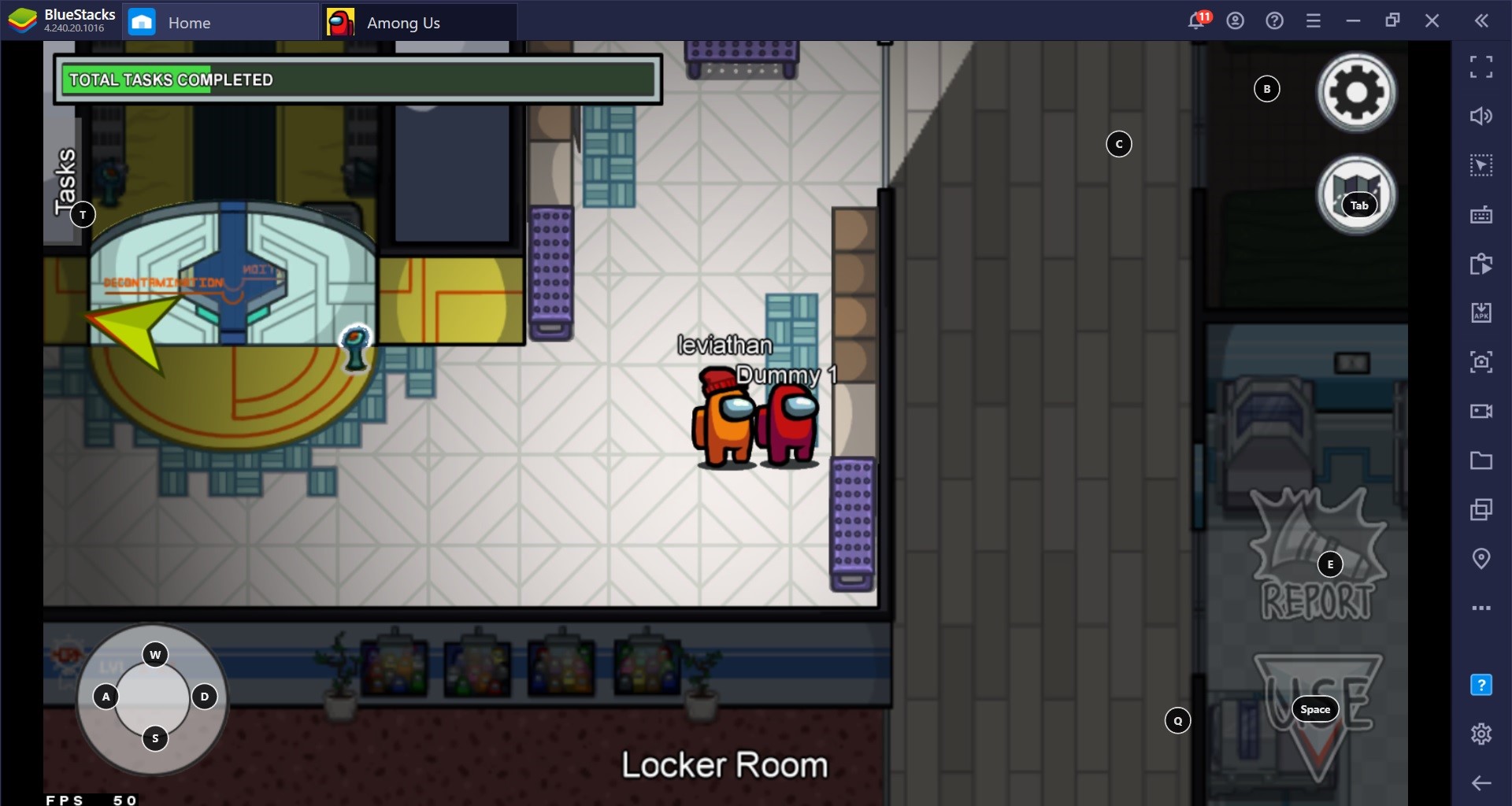
Players can enjoy Among Us even more on a bigger screen of their PC or Laptop with keyboard and mouse via BlueStacks for an elevated gameplay experience.