Hardest Levels in Geometry Dash Lite and Tips to Beat them


Since its initial release by RobTop Games in 2013, Geometry Dash Lite has become a legendary test of patience and precision. It is the kind of game that looks simple on the surface but quickly turns into a high-stakes challenge where one wrong tap sends you right back to the beginning. If you are looking to master the most difficult obstacles and finally claim victory, understanding the mechanics and layout of the Geometry Dash Lite levels is your first step toward success. This guide will walk you through the toughest stages and provide the tactical insight needed to beat Geometry Dash Lite.
All Main Levels in Geometry Dash Lite
The Lite version of the game offers a curated selection of challenges that introduce players to the core mechanics of the series. While the full version of the game currently features 22 main classic levels and a secret stage known as The Challenge, the Lite version specifically contains 17 levels. Each of these stages increases in complexity, requiring players to master different vehicles and gravity mechanics. The current lineup of levels includes:
- Stereo Madness
- Back on Track
- Polargeist
- Dry Out
- Base After Base
- Can’t Let Go
- Jumper
- Time Machine
- Cycles
- xStep
- Clutterfunk
- Theory of Everything
- Electronman Adventures
- Clubstep
- Electrodynamix
- Hexagon Force
- Blast Processing

What is the Hardest Level in Geometry Dash Lite?
Identifying the Geometry Dash Lite hardest level is a frequent topic of debate among the community. To earn the title of the most difficult, a level must combine fast-paced movement, intricate rhythm, and obstacles that demand split-second reactions. For many dedicated players, the pinnacle of this challenge is Theory of Everything, often referred to as TOE.

What sets Theory of Everything apart from its predecessors is the sheer density of its obstacles. Completion can sometimes take players tens of thousands of attempts as they struggle to sync their movements with the rapid speed of the stage. It acts as a comprehensive test of every skill you have learned up to that point, requiring absolute accuracy and a deep understanding of the game’s evolving mechanics.
How to Beat the Theory of Everything level in Geometry Dash Lite?
To conquer Theory of Everything, you must prepare for a barrage of swift obstacles that necessitate instant reactions. This level is particularly famous for forcing players to transition rapidly between different gameplay modes. You will start with traditional platforming, move into gravity-flipping sequences, and eventually navigate rocket ship segments that require intense precision.
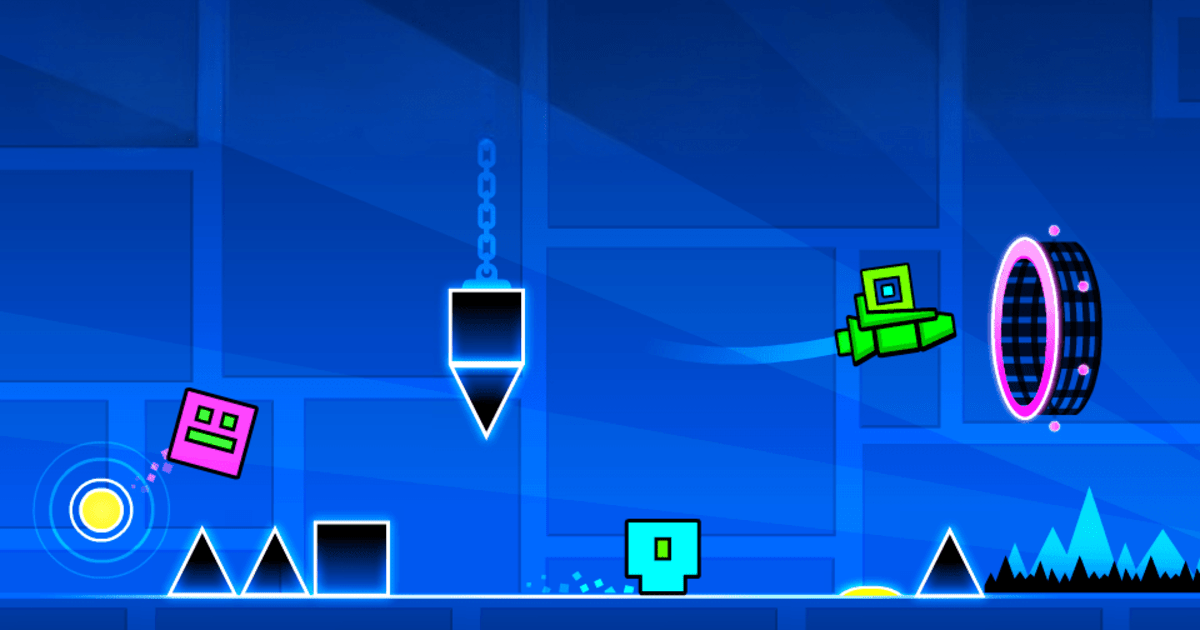
One of the defining features of this stage is the introduction of the magenta jump pad and the magenta jump orb. These are frequently paired together during cube and ball sequences to create complex jumping patterns. Additionally, you will encounter the UFO form and sections involving the size portal, which changes the scale of your character and shifts your perspective on the obstacles. Pay close attention to arrow pulsators during ship and UFO segments, as these indicate the correct path through hazardous alternate routes.

If you are looking to fully master the level, you will need to collect the three secret coins hidden within its hazards:
- The first coin is found at 30% during the UFO segment. After you pass over a wide structure, you must hop past a saw-blade and navigate through a false column near the ceiling before clearing one more saw-blade to grab the prize.
- The second coin appears at 56% during the ship sequence. After successfully avoiding the first three obstacles, you must fly with extreme care beneath the fourth obstacle near the ground to claim the coin.
- The third coin is located at 83% in the cube form. After hitting two jump orbs, you must immediately jump off the platform to fall past a set of saw-blades. You will land near a jump pad and the coin. A second jump pad will launch you back toward the main route, where you must hit one final jump orb to stay on track.
Tips for Beating the Hardest Levels in Geometry Dash Lite
The secret to success in the most difficult stages is a combination of muscle memory and psychological endurance. Because these levels are so rhythm-heavy, your hands often learn the patterns before your brain fully processes them. Here are some foundational strategies to help you improve:
-
Focus on Memory and Accuracy
As levels like Theory of Everything 2 demonstrate, the game eventually starts using fake obstacles and invisible slopes to trick you. You cannot rely on sight alone; you must memorize the exact timing of every tap. Practice the difficult segments repeatedly until the movements become automatic.
-
Master the Different Forms
Whether you are flying the ship, hopping in the UFO, or navigating the wave, each form has a distinct weight and feel. Rocket ship segments in Theory of Everything are notoriously shocking and difficult, requiring a steady hand to maintain the correct altitude. Spend extra time in practice mode on transitions where your vehicle changes, as these are often where runs end.
-
Use Practice Mode Efficiently
Never try to beat a hard level in one go without using practice mode first. Place checkpoints before difficult jumps so you can master a specific sequence without having to play through the entire beginning of the level. Once you can complete a section ten times in a row without failing in practice mode, you are ready for a real run.
-
Stay Calm and Patient
It is entirely normal for the hardest levels to take thousands of attempts. Frustration leads to mistimed taps, which only results in more failure. If you find yourself hitting a wall, take a break and come back with fresh eyes. Consistency and patience are the most powerful tools in any masters arsenal when trying to beat Geometry Dash Lite.
Players can enjoy playing Geometry Dash Lite on a bigger screen of their PC or Laptop via BlueStacks along with your keyboard and mouse.