A Complete Guide to the Mai Shiranui Collaboration Event in Stormshot Isle of Adventure
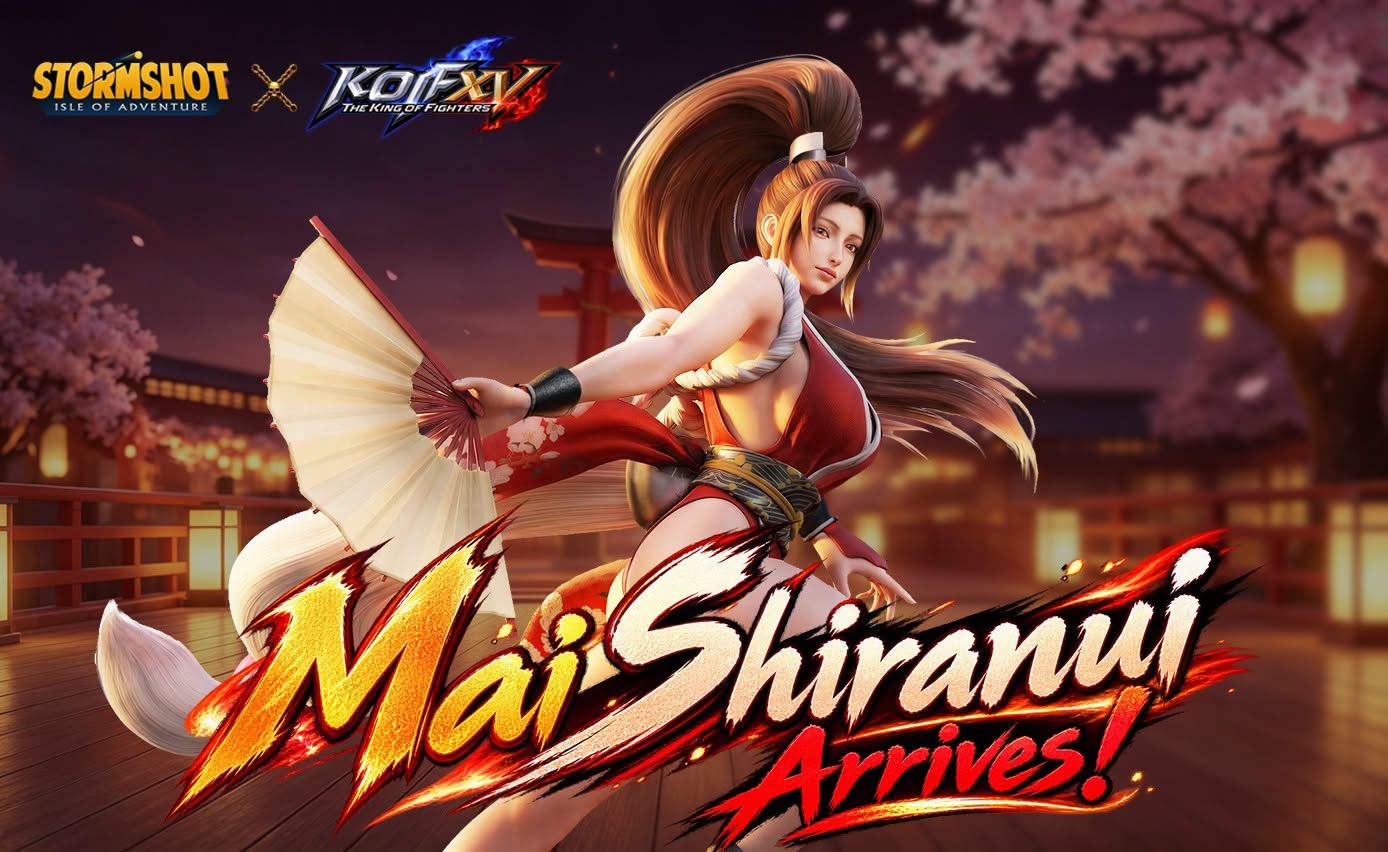
Stormshot: Isle of Adventure has opened the first phase of its collaboration with The King of Fighters XV, and the headline addition is Mai Shiranui herself. The phase began on September 4 and is built around a dedicated event hub titled Mai Shiranui Arrives, which gathers several separate modes under one screen. Unlike a standard hero banner, Mai Shiranui is not recruited through a summoning pull. She is a reward you work toward, which means understanding how the individual event modes feed into one another is the difference between finishing the event with her and finishing it with a pile of unspent currency. This guide walks through each confirmed mode, what it asks of you, and how the rewards connect.
What The Collaboration Adds To Stormshot
According to the official announcement, taking part in the first phase gives you a chance to recruit the hero Mai Shiranui along with Mai Shiranui themed skins and a landmark. The in-game hub reflects that scope. It holds Blossomwing Scroll, Mai Shiranui’s Bounties, Neon Sign-In, Surprise Season Pass, Mai Shiranui’s Request and Treasure Drops as its main entries, with a side rail carrying the Ninja Arts Exchange, 7-Day Sign-In, Top-Up Rewards and a Crystal Pack. A secondary navigation strip also lists Path of the Kunoichi and Kunoichi Quests alongside the Events Calendar.
Every one of these modes exists to push you toward the same destination. The modes generate collaboration currency and card progress, and the exchange shop converts that progress into the collaboration rewards, including Mai Shiranui. The table below summarises how the confirmed modes fit together.

How Mai Shiranui Is Actually Obtained
This is the part most players get wrong on their first look at the event, because the usual instinct in Stormshot is to head for the Tavern and start pulling. That is not how this works. The official announcement states that you obtain Blazing Emblems and Celebration Lanterns by participating in the special collaboration events, then exchange them in the collaboration exchange shop for rewards including the hero Mai Shiranui, Mai Shiranui themed landmarks, a Mai Shiranui themed castle appearance and more.
In practical terms, that makes the exchange shop the centre of the entire event and every other mode a supply line feeding it. There is no random element in acquiring her and no pity counter to chase. What matters is total participation across the event period, because that is what determines how much currency you accumulate before the phase closes. If you intend to walk away with the hero rather than the cosmetics, the correct approach is to treat currency as the scarce resource and to check her cost in the exchange before spending anything on lower value items.

Mai Shiranui’s Bounties And The Daily Quest Rotation
Mai Shiranui’s Bounties is the steady daily income of the event. It splits into a Personal Quests tab and an Alliance Quests tab, and the official description confirms that you accumulate both personal and alliance points to unlock rewards. What makes this mode manageable is that the quests are not new content. They point you at activities you are already doing in your normal Stormshot routine, so the bounties largely complete themselves if you play as usual.
The personal quest list observed during the event includes the following objectives, each paying out event currency alongside bulk resources:
- Complete 20 Divination Quests
- Complete 4 Tactical Missions
- Make deliveries in Skyrunner’s Fortune 2 times
- Complete Deepsea Hunt 2 times
One detail here deserves more attention than its small print suggests. The quest list refreshes daily at 00:00 UTC, and unfinished quests cannot be continued after the refresh. Progress does not carry over, so a bounty left at nineteen of twenty Divination Quests at reset is simply lost. Work out when 00:00 UTC falls in your own time zone and clear the list before it, rather than assuming you can finish a long task across two days. The mode also carries a Leaderboards tab and a Bound Alliance entry, so consistent daily clearing benefits your alliance standing as well as your own totals.

Blazing Wishes And The Collaboration Card Sets
Blazing Wishes is the collection layer of the collaboration. Participating in the various event modes awards collaboration card packs, and those packs open automatically the moment you receive them, so there is nothing to hoard or save for a better moment. The star rating on a pack determines both how many cards it contains and how high the star ratings of those cards are, which means higher value packs are meaningfully better rather than just larger.
The full collection runs to 108 cards spread across eight sets, and each set contains nine cards. The sets confirmed on screen are Vermilion Gate, Kachousen Case, Flame Dance Scroll, Burning Trial and Crimson Sakura Bloom. Completing a set is what pays out, so spreading your progress evenly across all eight is far less useful than concentrating on finishing whichever sets are closest to complete.

Inside A Card Set
Opening an individual set shows its nine slots and which ones you have filled. The Kachousen Case set, for example, contains the Carved Fan Case, Fan Ribs, Patterned Fan Leaf, Tassel Charm, Crimson Fan Clasp, Silken Fan Sleeve, Wooden Keepsake Box, Bronze Fan Fitting and Fan Keeper’s Charm. Most of these are one star cards, while the Bronze Fan Fitting and Fan Keeper’s Charm sit at two stars, which is a reliable sign of where the bottleneck in any given set will be.
The completion reward for a set is displayed on the same panel, and in the case of Kachousen Case it consists of keys, event currency and a chest. Because the low star cards arrive frequently and the higher star cards do not, most players will find themselves sitting on several sets that are eight of nine complete. That is precisely the situation the next feature exists to solve.

Filling Gaps With Quick Request
The event lets you request cards from alliance members to complete your collection faster, and the Quick Request panel is where this happens. You can select up to five cards to request at a time, with the panel showing how many of each set you currently have outstanding. The five sets available to request from in the observed interface were:
- Vermilion Gate
- Kachousen Case
- Flame Dance Scroll
- Burning Trial
- Crimson Sakura Bloom
This is the single strongest argument for joining an active alliance before engaging with the collaboration seriously. A card you cannot pull yourself can be supplied by someone who has duplicates, and in a set based system that is often the only realistic path to completion. The Blazing Wishes interface also carries a Message Center, a Daily Quests entry and a Get Card Packs button, so there are additional routes to packs beyond passive accumulation.

Blossomwing Scroll And Its Bonus Structure
Blossomwing Scroll asks you to complete special quests in order to light up puzzle pieces on a scroll, gradually revealing an illustration underneath. The board is a four by four grid of sixteen numbered tiles, with reward chests arranged along the right edge and the bottom edge, plus a larger grand prize chest in the corner.
The reward structure is what makes this mode worth planning rather than simply grinding. Lighting up a full row or a full column awards bonus rewards on top of the individual quest rewards, and lighting up the entire puzzle claims the grand prize. That means the order in which you complete tiles genuinely matters. Working methodically along a single row or column to trigger the line bonus is more efficient than scattering completions across the board and collecting nothing extra until very late in the event.

Mai Shiranui’s Request On The Kingdom Map
Mai Shiranui’s Request is the combat entry in the collaboration, and its brief is straightforward. Mai Shiranui has a request for you, and the objective is to defeat the enemy and prove who is the true champion. The only action button on the panel opens the Kingdom Map, which places this firmly in the world map layer of the game rather than in an isolated event instance.
Rewards arrive as a timed drop consisting of a chest, an event item and 100 VIP points, with a daily cap displayed as dropped today out of five. That cap is the key planning point. There is a fixed ceiling on how much you can extract from this mode per day, so the VIP points and chests accumulate steadily over the event rather than in a single burst of activity. Anyone treating the collaboration as a weekend project will leave a substantial share of this mode’s rewards unclaimed.

Spending Wisely In The Ninja Arts Exchange
The Ninja Arts Exchange is where collaboration currency becomes actual rewards, and it is divided into an Exotica tab and a Rarities tab, with a Value Hoard section alongside. Every item carries a visible remaining count, so this is a stock limited shop rather than an open one. Once an item is sold out it is gone for the rest of the phase.
The Exotica tab is where the prestige items sit. The headline entry is the Blazing Sakura Keep, a permanent castle appearance priced at 1000 currency with a remaining stock of exactly one. Other entries on the tab run at 1500, 250 and 200, with cheaper repeatable items at 25 and a two cost item stocked at sixty. The Rarities tab is the practical one, carrying Legendary Thunderhoof Rune Set random chests in bundles, keys at ten for twenty, and low cost material chests stocked in the hundreds.
The spending logic follows directly from the stock limits. High cost, single stock items such as the permanent castle appearance will not be there later if you delay, but neither will the hero if you exhaust your currency on rune chests first. Check the full list before your first purchase, decide whether the hero or the cosmetics are your priority, and budget backwards from that. The exchange also offers an Exchange Reminder toggle, which is worth enabling so that accumulated currency does not sit unspent when the phase ends.

The Remaining Event Tracks
Several further entries sit in the hub without detailed public documentation at the time of writing. Neon Sign-In and the 7-Day Sign-In are login based tracks, Treasure Drops and the Surprise Season Pass run on their own separate timers, and Top-Up Rewards and the Crystal Pack are tied to spending. Path of the Kunoichi and Kunoichi Quests appear in the secondary navigation as additional collaboration content.
Each of these carries its own countdown, and those countdowns do not all match. The Surprise Season Pass in particular ran on a noticeably shorter timer than the main event modes, which is a useful reminder to check each entry individually rather than assuming a single event deadline covers everything. Open each track once at the start so you know what it asks of you, because several are the kind of passive reward line that costs nothing but is easy to forget to claim.

The Mai Shiranui collaboration is unusual for Stormshot in that its best reward is not gated behind luck. Every mode in the hub produces currency or collection progress, and the exchange shop turns that progress into the hero, the landmarks and the castle appearance. That structure rewards consistency far more than intensity. Clearing the daily bounties before the 00:00 UTC reset, staying in an active alliance so that Quick Request actually works, completing Blossomwing rows rather than scattered tiles, and hitting the daily cap on Mai Shiranui’s Request will between them generate a steady flow of currency across the whole phase. Check the exchange list early, decide what you are saving for, and spend deliberately rather than reactively, and you should reach the end of the first phase with the rewards you actually wanted rather than a handful of leftover materials. For the best gaming experience, play Stormshot: Isle of Adventure on BlueStacks!